
How to Search Comanche County Court Records
The main path to Comanche County Court records is the Oklahoma State Courts Network, known as OSCN. It is free and open to the public. The site holds District Court dockets for civil, criminal, family, probate, small claims, protective order, traffic, and wildlife cases. Pick Comanche County District Court in the court list to keep results local. The county directs people to OSCN first, before they ask the clerk for copies.
Have a few details ready before you start. A case number gives the cleanest result. A full name works too, and you can add a birth date range and a party type to narrow a common name. The Comanche County website links the same tools and lists the offices that keep each record. Below is the full set of search steps the system supports.
- Open the OSCN docket search page.
- Choose Comanche County District Court in the County or Court list instead of all Oklahoma courts.
- Enter a known case number and submit, or switch to a name search using last, first, and optional middle name.
- Add a birth date range or a party type, such as defendant or petitioner, to trim a broad name search.
- Limit by case type, like Criminal Felony, Family and Domestic, Probate, or Traffic.
- Use filing and closing date ranges to focus the list.
- Open a result to view the case style, judge, parties, events, counts, dispositions, and docket entries.
- Note the docket title and request a copy from the Court Clerk when a document is not posted online.
Visit comanchecountyok.gov to reach the county portal that links these record tools.
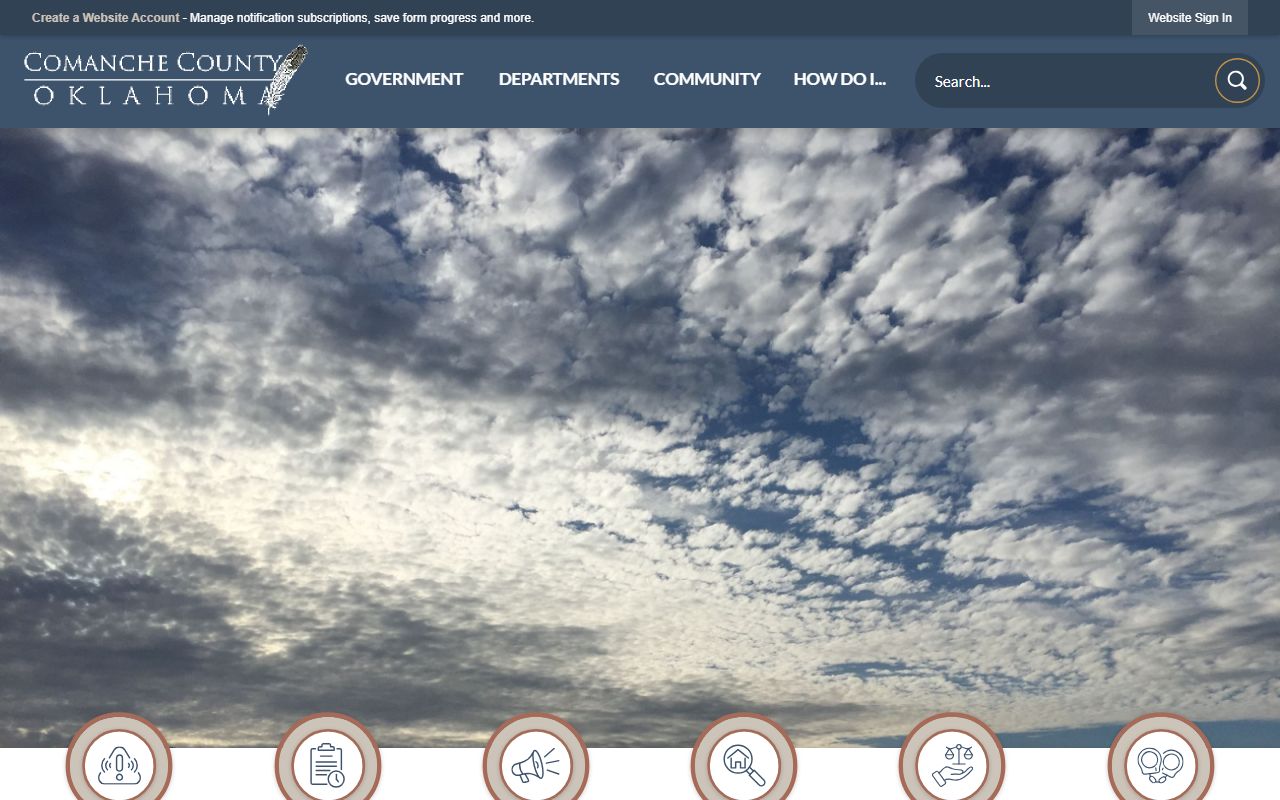
The county homepage points to the clerk offices, OSCN, and the records request form in one place. Use it as a map when you are not sure which office holds a file.
The OSCN docket tool offers many fields, but you rarely need them all. The court list and either a case number or a name carry most searches. Party type matters because one person can show up as a defendant in one case and a witness in another. The table below lists the core fields and how each one works.
| Field | Type | How It Works |
|---|---|---|
| County or Court | Dropdown | Pick Comanche County District Court to keep results local. |
| Case Number | Text | Cleanest path; prefixes show case type, such as CF, CM, CJ, FD, PB, and TR. |
| Last / First / Middle Name | Text | Party name search for people and businesses. |
| Born On or After / Before | Date | Adds a birth date range to filter a common name. |
| Party Type | Dropdown | Defendant, plaintiff, petitioner, attorney, witness, and more. |
| District Court Case Type | Dropdown | Limits to felony, misdemeanor, family, probate, traffic, and other types. |
| Cases Filed / Closed Date | Date | Limits by when a case opened or closed. |
| Citation Number | Text | Finds District Court traffic citations; it does not search city tickets. |
One limit is worth knowing up front. OSCN searches District Court citations only. Lawton and Cache city tickets live in their own municipal systems and will not appear here.
Note: OSCN often marks a document as available at the Court Clerk's Office, which means the docket is free online but the image must be requested in person or by mail.
The Comanche County Judicial System
Oklahoma runs its trial work through District Courts. Comanche County belongs to District 5, and the county lists seven judges on its judicial staff. The District Court handles civil and criminal matters, plus family, probate, and traffic cases. Above the trial court, the state uses two courts of last resort. That setup is unusual.
Civil appeals climb toward the Oklahoma Supreme Court, with the Oklahoma Court of Civil Appeals acting as an intermediate stop. Criminal appeals go to the Oklahoma Court of Criminal Appeals. At the city level, municipal courts in Lawton and Cache handle ordinance violations. The table maps how a case can move through the system.
| Court | Jurisdiction | Case Types |
|---|---|---|
| Oklahoma Supreme Court | Statewide, civil last resort | Final civil appeals |
| Court of Criminal Appeals | Statewide, criminal last resort | Final criminal appeals |
| Court of Civil Appeals | Statewide intermediate | Civil appeals before the high court |
| Comanche County District Court | County trial court | Civil, criminal, family, probate, traffic, small claims |
| Municipal Court | City of Lawton or Cache | City ordinance and traffic misdemeanors |
Case flow: Municipal Court › District Court › Court of Civil Appeals › Oklahoma Supreme Court (civil) or Court of Criminal Appeals (criminal)
The county judicial staff is listed in the public judge directory. Current judges include Christine M. Galbraith, Scott D. Meaders, Lisa Shaw, Grant Sheperd, Emmit Tayloe, Jay Walker, and Susan Zwaan. Tribal courts add another layer near Lawton.
The Comanche Nation Tribal Court is a separate sovereign court, not part of the county system.
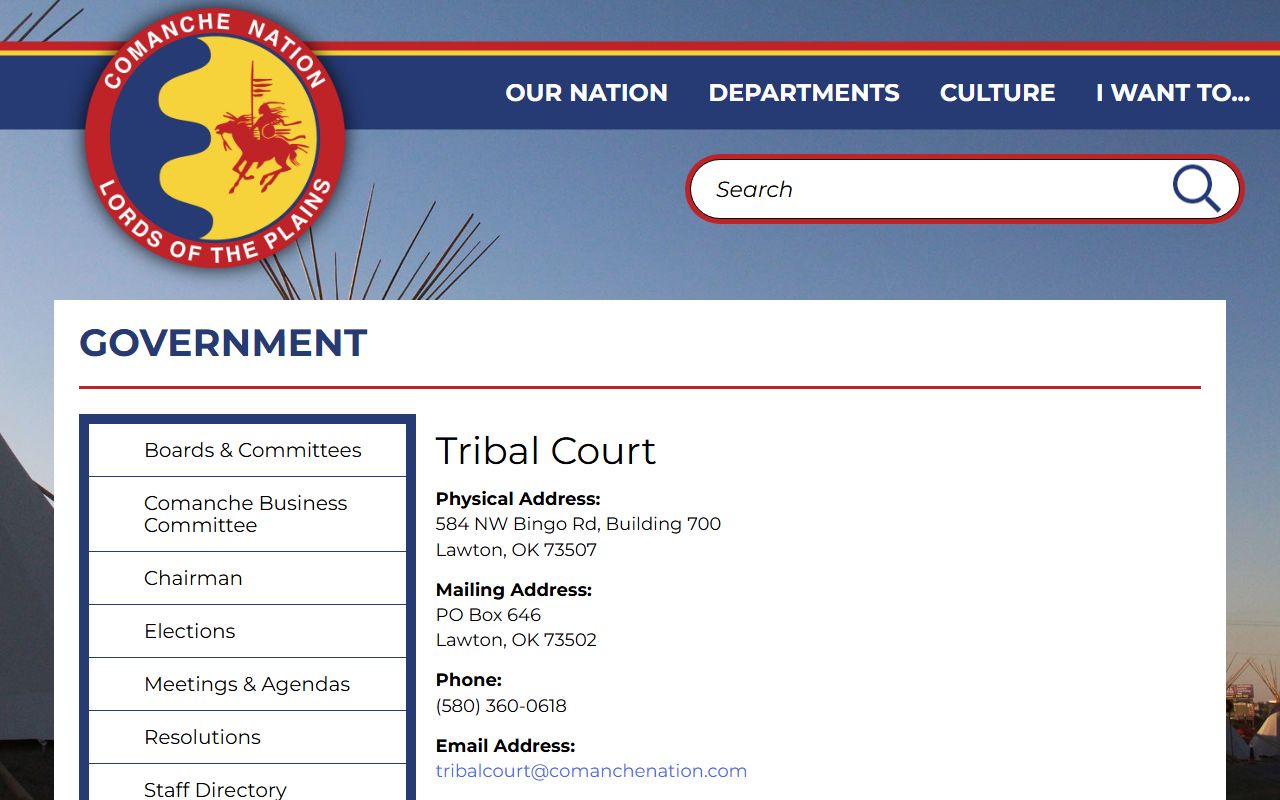
Tribal, state, federal, and city courts all operate around Lawton, so the right venue depends on who filed the case and where the event took place.
District Court and Municipal Court Compared
Many searches stall because people mix up the county court with a city court. The District Court is the state trial court for Comanche County. Municipal courts handle city ordinance cases only. A ticket written inside Lawton city limits may never reach OSCN, because it sits in the city system. The comparison below sorts the two apart.
| Feature | District Court | Municipal Court |
|---|---|---|
| Authority | State trial court, District 5 | City of Lawton or Cache |
| Case types | Felony, misdemeanor, civil, family, probate, traffic | City ordinance and traffic misdemeanors |
| Records keeper | Comanche County Court Clerk | City municipal court clerk |
| Online search | OSCN docket search | Separate city payment portal |
| Appeals | State appellate courts | Reviewed under city process |
This split shapes warrant and traffic searches too. A missed city arraignment can produce a municipal warrant that is not the same as a District Court warrant. Check both venues when you are not sure which court holds the matter.
Comanche County Courthouse and Contact
The Comanche County Courthouse stands in downtown Lawton at 315 SW 5th Street. The District Court runs on the 4th and 5th floors. The building works as a combined campus. It houses the District Court, the Court Clerk, the County Clerk, the District Attorney, and the detention and sheriff offices. The federal courthouse sits one block away at 410 SW 5th Street, which is a common point of confusion.
The Court Clerk runs three offices inside the courthouse. Criminal records and traffic files are in Suite 504. Civil, divorce, and probate files are in Room 207. Small claims, protective orders, and marriage licensing are in Room 205. The County Clerk keeps land and county records in Room 304. The cards below list the main contacts.
Comanche County Courthouse
315 SW 5th Street, 4th & 5th Floor
Lawton, OK 73501
580-355-4017
Comanche County covers more than 1,069 square miles and includes Fort Sill and the Wichita Mountains National Wildlife Refuge. Current population and area figures are tracked through the U.S. Census QuickFacts tool.
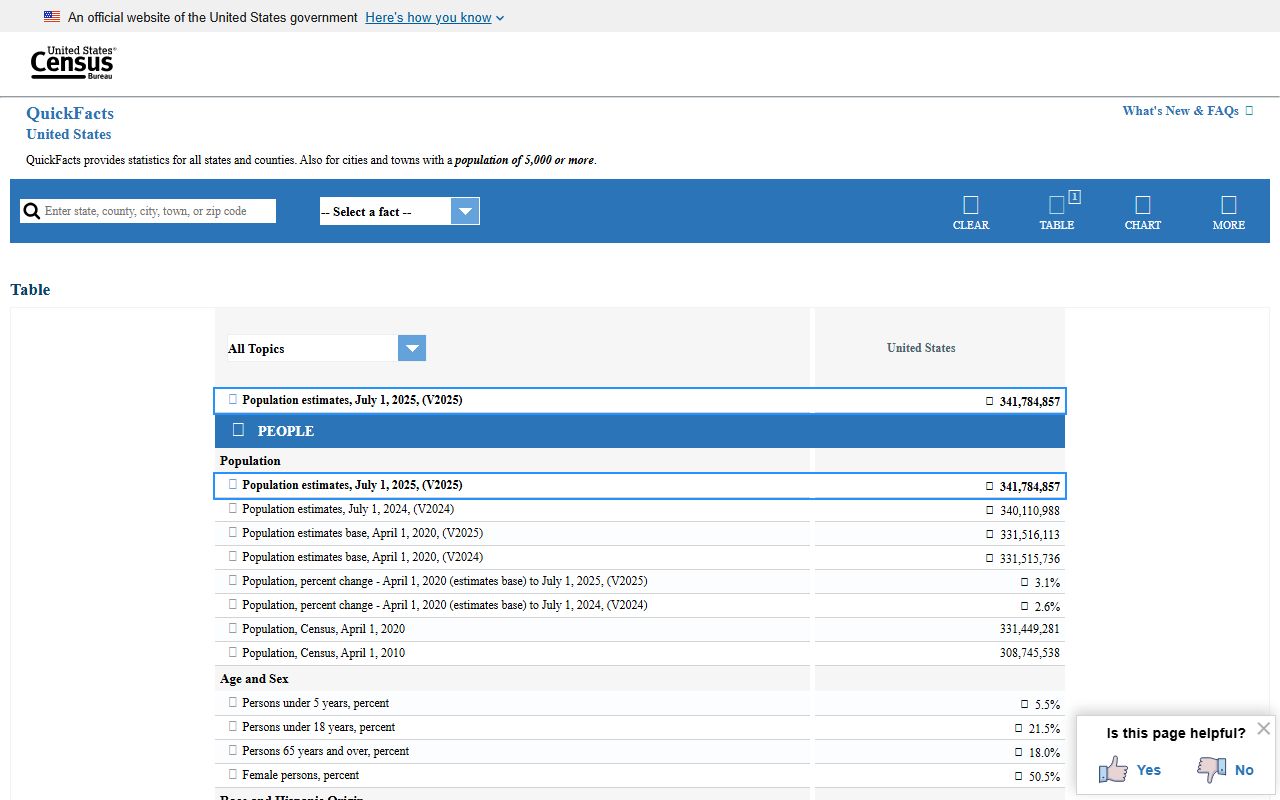
The county's size and the Fort Sill population both feed caseloads in the District Court, from traffic and family matters to criminal filings.
Types of Court Records in Comanche County
The District Court produces a wide range of public files. The Court Clerk keeps them, sorted by office and case type. OSCN uses a prefix on each case number to flag the type. Most files are open to the public unless a statute seals them. The list below covers the main categories you will meet in a search.
- Criminal records - Felony and misdemeanor cases with charges, pleas, dispositions, and sentences.
- Civil records - Money claims, damages, injunctions, garnishments, and replevin matters.
- Family and divorce records - Divorce, custody, paternity, and protective order files.
- Probate records - Wills, estates, guardianships, and trust matters in the civil office.
- Traffic records - District Court citations searchable by citation number on OSCN.
Some files carry tighter rules. Juvenile and adoption matters appear under the small claims office but stay confidential. Land records, deeds, and tax liens belong to the County Clerk, not the Court Clerk. Marriage licenses run through the Court Clerk's small claims office rather than the County Clerk.
What Comanche County Court Records Show
An OSCN case page packs a lot into one view. You see the case style, the judge, and the parties. You see events, counts, and the docket. A criminal count links the statute cited, the offense date, and the disposition. The table breaks down the core fields you will read on a result.
| Field | What It Shows |
|---|---|
| Case Number | Unique ID with a type prefix, such as CF for felony or FD for family. |
| Filing Date | Date the court accepted the case, plus the closing date when set. |
| Parties | Defendant, plaintiff, petitioner, attorneys, arresting agency, and judge. |
| Charges / Cause | Each count as filed, with offense text and a linked statute. |
| Disposition | The outcome of a charge or the whole case. |
| Sentence / Judgment | Penalty or final order, often detailed in a court minute. |
Docket entries run in date order. Each line shows a code, a description, and any document availability note. Costs, fines, and bond events also appear. Sensitive data such as Social Security numbers, minor names, and account numbers stays redacted or withheld.
Legal Terms in Comanche County Records
Court files use words that are easy to misread. A short glossary clears up the most common ones. These terms show up on dockets, counts, and orders across nearly every case type. Learning a handful makes a result far easier to follow.
- Plaintiff
- The person or entity that brings a civil case.
- Defendant
- The person sued in a civil case or charged in a criminal one.
- Disposition
- The outcome of a charge or a full case.
- Docket
- The dated, line-by-line list of court activity.
- Bench warrant
- A warrant from the court, often for a missed appearance.
- Certified copy
- A clerk-authenticated copy used for official purposes.
A count is a single charge or claim inside a case. An arraignment is the first criminal hearing, where a plea is entered. A continuance is a postponement. These small terms add up to the full story of a file.
Comanche County Public Records Laws
Oklahoma treats court and county files as public unless a law says otherwise. The Open Records Act sets the baseline. People may inspect and copy records during business hours, with set exceptions. The Court Clerk and County Clerk both work under these rules. The callout lists the key statutes in plain English.
Key Statutes:
51 O.S. §§ 24A.1-24A.33 - The Open Records Act makes records of public bodies open unless a law keeps them confidential.
51 O.S. § 24A.5 - Public records are open for inspection and copying during regular business hours, subject to exceptions.
51 O.S. § 24A.8 - Sets which law enforcement records must be released and which investigatory material may be withheld.
22 O.S. § 18 - Allows expungement of a qualifying arrest record, sealing it from public view.
The first public route to a District Court file is OSCN. Use it to find the case number, parties, and document titles. Then ask the Court Clerk for copies. Marriage records under 43 O.S. § 5 follow their own identity and age rules. County land records flow through the County Clerk under the same open-records framework.
Restricted and Confidential Court Records
Not every file is open. Some are sealed by statute, and some by court order. Juvenile records are confidential under 10A O.S. § 2-6-102, even though juvenile matters are listed under the small claims office. Adoption files are tightly restricted. Mental health proceedings can be closed as well. Personal identifiers are redacted across the board.
Expungement removes or limits public access. The state separates two paths. Under 22 O.S. § 18, a qualifying arrest record can be sealed. Under Section 991(c), a deferred sentence is updated to show a not-guilty plea and dismissal, though the arrest record stays. A person files in the court that holds the case, and the Oklahoma State Bureau of Investigation charges a processing fee for the arrest-record step.
Note: Expunging the court record is free, but the OSBI arrest-record expungement carries a $150 processing fee, and local agency fees may also apply.
Specialty Courts in Comanche County
Comanche County runs treatment-court programs alongside the regular docket. The county staff directory lists a Drug Court and Mental Health Coordinator tied to the District Attorney's office. Oklahoma's adult drug courts give eligible non-violent felony offenders a structured, court-supervised treatment path in place of incarceration. The state drug court program began in 1995 and now reaches most counties.
A mental health court works in the same spirit, pairing supervision with treatment. State records also point to a Comanche County Veterans Treatment Court, which fits a county that hosts Fort Sill. These programs aim to cut repeat offenses and stabilize participants. Official county pages do not publish a full handbook, eligibility checklist, or graduation rate, so confirm program details with the coordinator before relying on them.
Comanche County Sheriff and Jail
The Comanche County Sheriff's Office is led by Sheriff Michael Merritt, who was sworn in late in 2024. The office sits inside the courthouse complex at 315 SW 5th Street. The Detention Center operates at the same address. Jail Administrator David Weber runs the facility, and the county links a current inmate roster through its detention page.
The Sheriff's Records Division is a rare 24/7 office. Its technicians run the state law enforcement terminal with NCIC access and verify all warrants and protective orders issued by Comanche County. That makes the division the key fallback when no public warrant portal exists. For the full roster and booking detail, see the Comanche County inmate records page, and for active warrants, the warrant records page.
The Sheriff's Office homepage carries local context, crime tips, and a scam alert.

The sheriff warns that scammers pose as deputies and demand money, and stresses the office never asks for payment by phone, PayPal, or gift cards.
The detention center drew heavy news coverage in 2024 over capacity and safety.
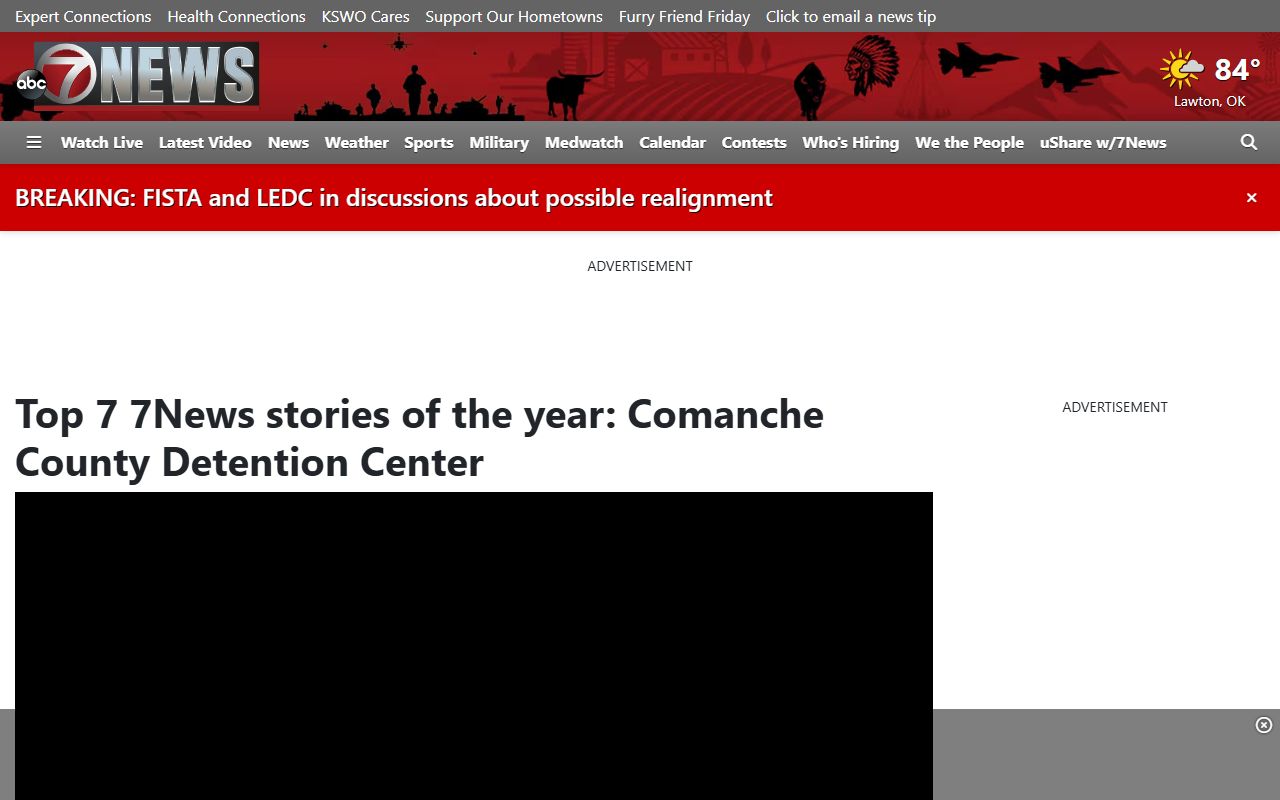
Custody, bond, and visitation tools run through the jail, and the roster shows current inmates only. Call the Detention Center for anyone no longer in custody.
Marriage, Divorce, and Probate Records
The Court Clerk handles marriage and divorce files, not the County Clerk. Comanche County no longer performs courthouse marriages, a fact many guides miss. Applicants complete the marriage information sheet and bring it to the small claims office. Divorce decrees stay with the Court Clerk for divorces that happened in the county. Full steps live on the marriage and divorce records page.
Probate is not a separate court here. The District Court handles estates through the Court Clerk civil office in Room 207. OSCN lists probate, filing of wills, and trust matters as case types. County land records may also hold deeds and orders tied to an estate. The probate records page covers the search path in detail.
- Testator
- The person who made a will.
- Executor
- The person named to carry out a will.
- Intestate
- Dying without a valid will.
- Conservator
- A person appointed to manage another's affairs.
Comanche County Court Records Fees
The Court Clerk charges set fees for copies and searches. Mail requests need a money order or cashier's check, since personal checks and cash are not accepted by mail. Criminal record requests carry a search fee on top of copy costs. The table lists common charges pulled from the county fee pages.
| Item | Amount |
|---|---|
| General copy, first page | $1.00 |
| General copy, each added page | $0.50 |
| Criminal record search fee | $10.00 |
| Criminal record first page | $1.50 |
| Divorce decree mail request | $10.00 |
| Marriage license | $50.00, or $5.00 with counseling proof |
Filing fees run higher. A divorce filing costs $268.39 with an attorney and $258.39 without one. A civil claim over $10,000 starts near $248.39, plus $10 per summons. The county filing fees page lists current amounts before you file.
Note: The Criminal Office does not accept criminal-record or background-check requests by email, so plan to mail or visit in person.
History of Comanche County Courts
Comanche County was created in 1901. The federal government opened former reservation lands in southwest Oklahoma, and Lawton was picked as the county seat. The county takes its name from the Comanche Tribe. Oklahoma reached statehood in 1907 as the 46th state. The county now spans more than 1,069 square miles.
The current courthouse is Lawton's fourth. A one-story frame building came first. A 1902 red-brick courthouse with cut stone followed. In the 1930s, a stone courthouse rose with Public Works Administration support. The modern building arrived with later downtown work. The Oklahoma Historical Society tracks this record.
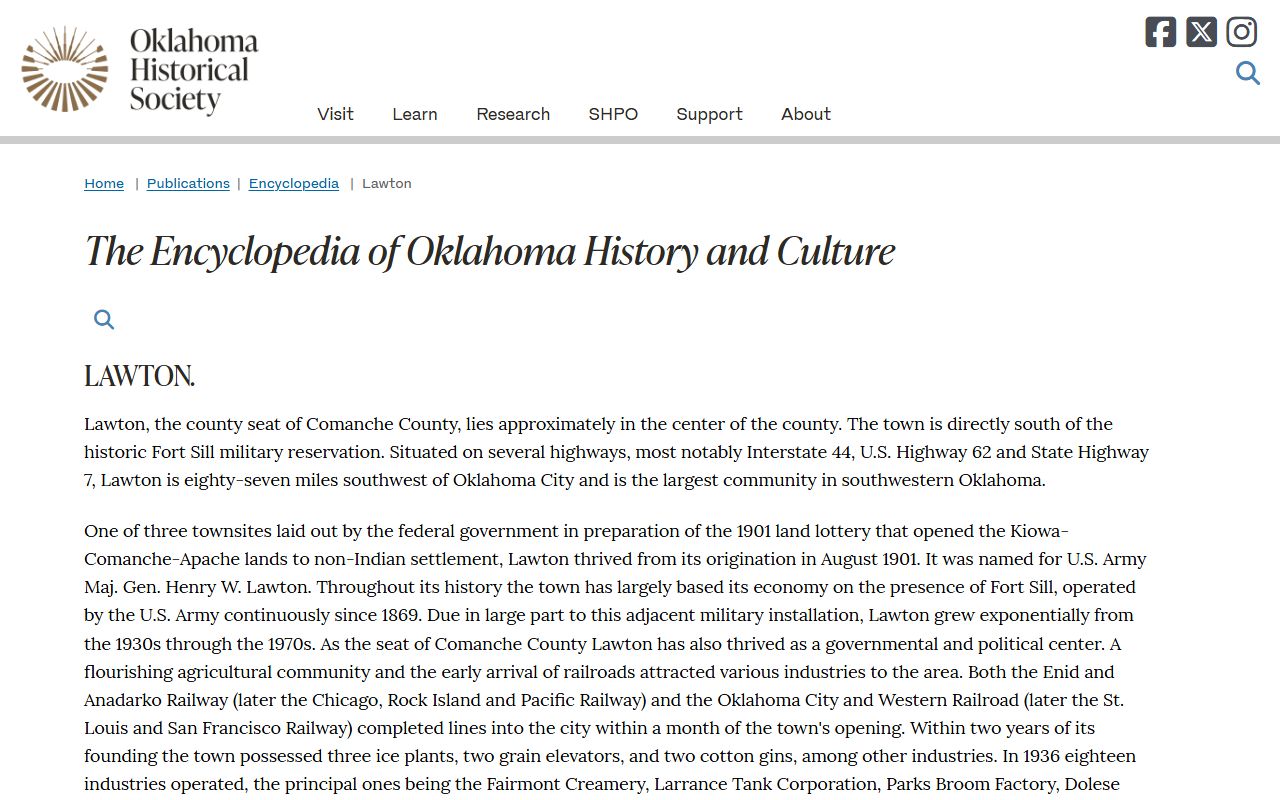
That long arc helps explain today's setup, where the county court, the federal courthouse, and tribal and city courts all cluster near downtown Lawton on or beside SW 5th Street.
Recent Comanche County Court News
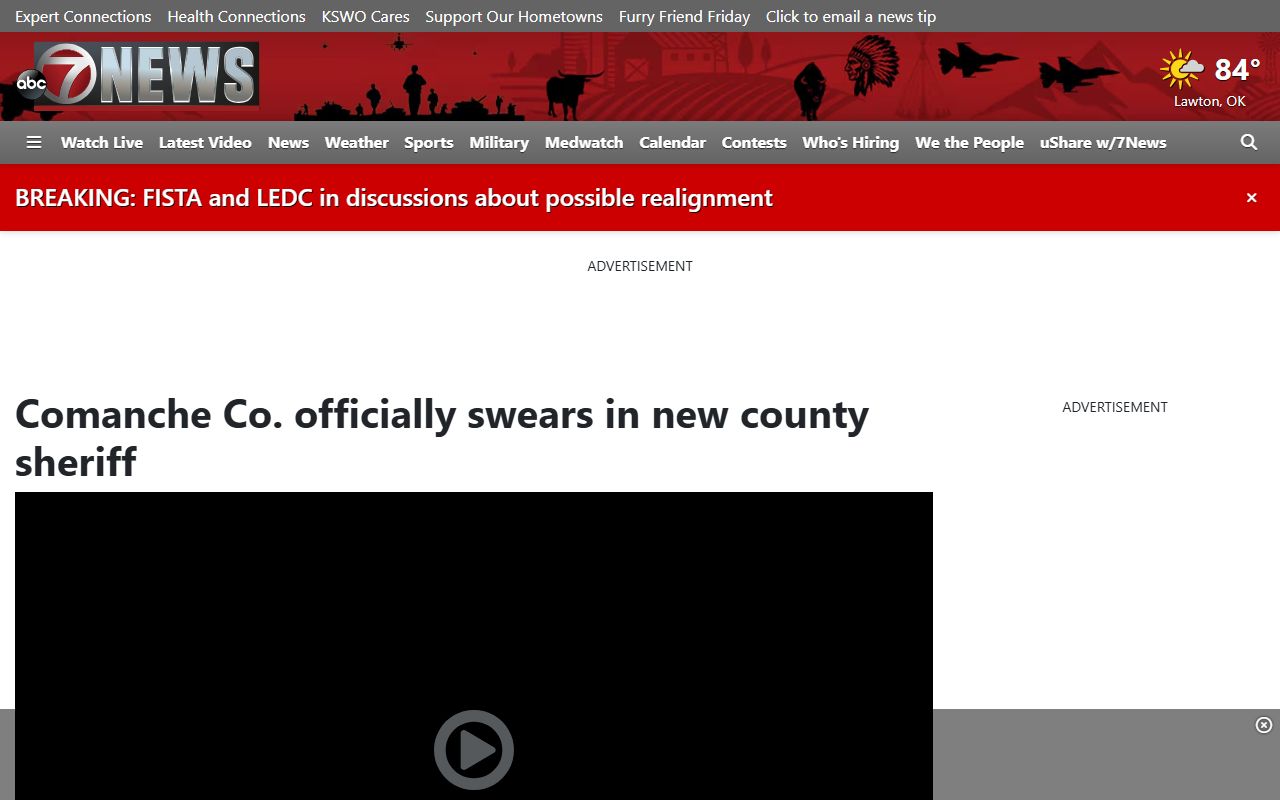
The sheriff's office saw a leadership change at the end of 2024. Michael Merritt won the November election and was sworn in at the courthouse. Early coverage focused on his first month and the department transition.
A local outlet covered the new sheriff's first weeks in office.

The interview touched on department updates and plans for county services. The swearing-in ceremony took place inside the courthouse.
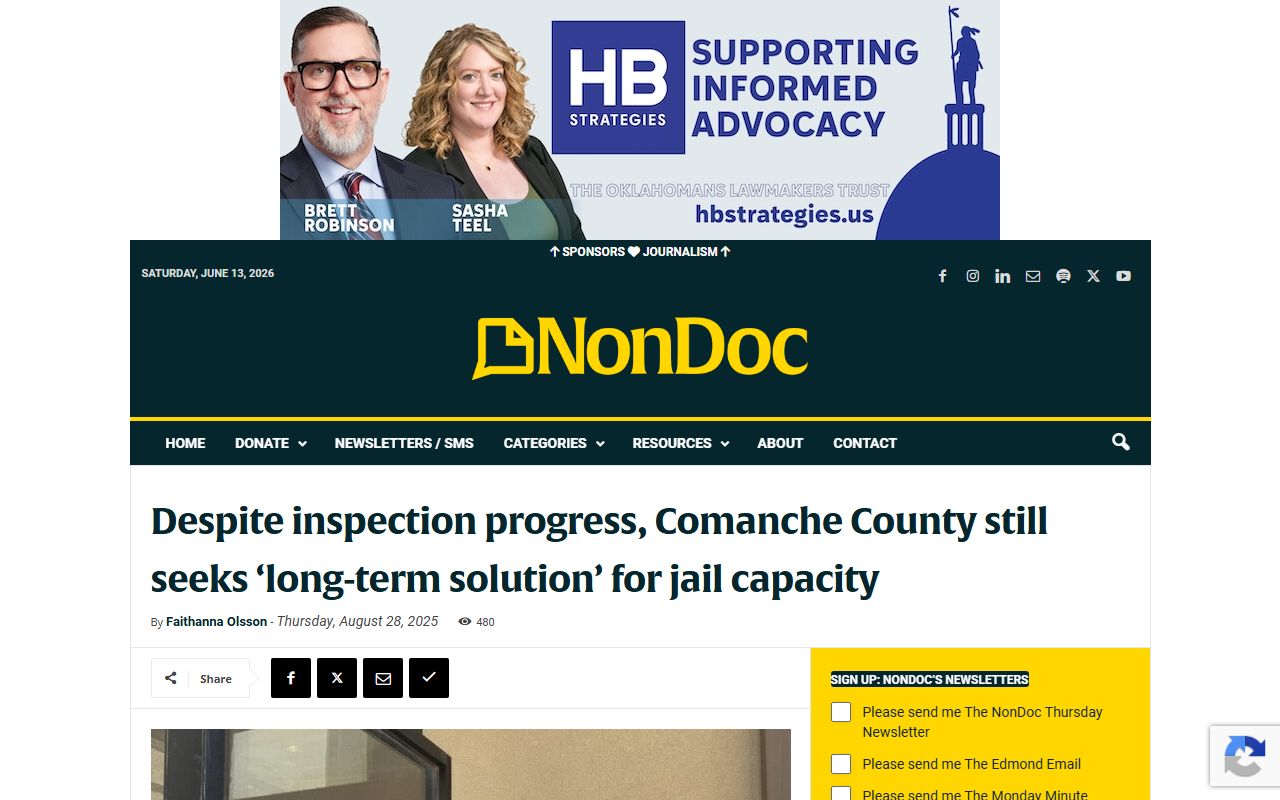
The jail also stayed in the news. A 2025 report on jail inspection progress noted gains but flagged a need for a long-term fix.
On the court side, the District Attorney appealed a dismissed firearm case in late 2025, with the matter pending before the Court of Criminal Appeals. These items shape how records and custody work locally.
Frequently Asked Questions
How do I look up a Comanche County court case online?
Use the OSCN docket search and pick Comanche County District Court. Enter a case number for the cleanest result, or search by name and add a birth date range or party type. You can limit by case type and by filing date. Open a result to read the parties, judge, counts, and docket.
Are Comanche County court records public?
Most are. The Oklahoma Open Records Act keeps court and county files open during business hours unless a statute seals them. Juvenile, adoption, sealed, expunged, and mental health records carry limits. Personal identifiers like Social Security numbers stay redacted.
How do I get a certified copy of a court document?
Find the case number and document title on OSCN first. Then submit the Court Clerk records request form in person or by mail with the fee. Mail requests need a money order or cashier's check. A general copy costs $1.00 for the first page and $0.50 for each added page, plus a certification fee when requested.
Why can't I find my traffic ticket on OSCN?
OSCN searches District Court citations only. Tickets written under Lawton or Cache city ordinances live in separate municipal systems. Search the city payment portal for those, since a missed city date can also trigger a municipal warrant.
Where do I check for a warrant?
There is no single public county warrant portal. The Sheriff's Records Division verifies Comanche County warrants and protective orders around the clock. OSCN dockets may show warrant entries. For city warrants, contact the Lawton or Cache municipal court that issued them.
Who keeps marriage and land records?
The Court Clerk handles marriage licenses through the small claims office, and the county no longer performs courthouse marriages. The County Clerk keeps land records such as deeds, mortgages, liens, and military discharge papers. Court and marriage files are not part of the County Clerk's scope.