
How Probate Works in Comanche County
Probate is the court process that settles an estate. When someone dies, their property, debts, and final wishes pass through a court for review. Comanche County handles this work inside the District Court. The county has no stand-alone probate court. The Court Clerk keeps the files in the Civil office, which sits in Room 207 of the courthouse in Lawton.
The same office covers guardianships and conservatorships. A guardianship protects a minor or an adult who cannot care for themselves. A conservatorship deals with that person's money and property. Estate cases, will filings, and trust matters land here too. Oklahoma groups all of these under the District Court, so a probate search in Comanche County runs through the same system that holds civil and family cases.
The judges who hear these cases are the District, Associate, and Special Judges who sit on the county bench. Seven judges serve the county. A probate matter may go to any of them, and the file names the assigned judge once the case opens.
The Court Clerk records, files, and keeps every District Court proceeding for the county. Twenty-one deputies work across three offices in the courthouse. The Civil office takes probate and guardianship cases. The Criminal office handles felony, misdemeanor, traffic, and wildlife matters. The Small Claims office covers protective orders, adoptions, and juvenile work. For an estate or a will, the Civil counter is the right one.
Probate Terms Defined
Probate files use words that rarely come up in daily life. A few clear definitions make the docket easier to read. The terms below show up in most Comanche County estate and guardianship cases.
- Testator
- A person who makes a will. The will speaks for the testator after death.
- Executor
- The person named in a will to carry out its terms and settle the estate.
- Intestate
- Dying without a valid will. State law then decides who inherits.
- Guardianship
- A court arrangement that places a minor or an incapacitated adult under another person's care.
- Conservatorship
- Court authority over the money and property of a person who cannot manage it alone.
- Letters Testamentary
- The court order that gives an executor legal power to act for the estate.
How to Search Comanche County Probate Records
The first stop for any Comanche County probate search is the Oklahoma State Courts Network, known as OSCN. The free OSCN docket search lists District Court cases for the county. You can look by case number when you have one, or by the names of the people tied to the estate. A probate case can be found under the decedent, the personal representative, an heir, or an attorney.
- Open the OSCN docket search and pick Comanche County District Court in the court list.
- Enter the case number if you have it. A probate case often carries a PB prefix.
- With no number, search by party name. Try the decedent, the personal representative, an heir, or an attorney.
- Set the District Court case type to Probate, Probate Miscellaneous Proceedings, Filing of Wills, or Trusts to narrow the list.
- Open a result to read the case style, filing date, judge, parties, orders, and docket entries.
- Request copies from the Court Clerk when a document is not posted online.
Many documents are not posted as images. The docket often notes that the paper waits at the Court Clerk's office. Write down the case number and the document title, then file a records request to get a copy.
OSCN is not the only way in. You can also visit the Civil office in person, mail a written records request with the fee and a stamped return envelope, or call the main Court Clerk line for help with a page count and cost. The records request form asks for the case number, the approximate year, the party names, and the title of the documents you want, so an OSCN search first makes the request go faster.
Note: OSCN searches District Court cases only, so a probate matter recorded with the County Clerk as a deed or affidavit will not show up in the same docket search.
Where Comanche County Probate Cases Are Filed
Probate cases are filed and stored with the Court Clerk Civil office. The office sits in Room 207 of the Comanche County Courthouse in Lawton. Staff there handle estates, guardianships, and trust matters along with divorce and other family work covered under Comanche County marriage and divorce records. The main Court Clerk line routes callers to the right desk.
Comanche County Court Clerk - Civil Office
315 SW 5th Street, Room 207
Lawton, OK 73501
580-355-4017
Mon-Fri 8:00 a.m. to 5:00 p.m.
The judge assigned to a probate case is one of the seven who serve the county bench. The county posts each name and a direct phone number on its Comanche County judge directory.
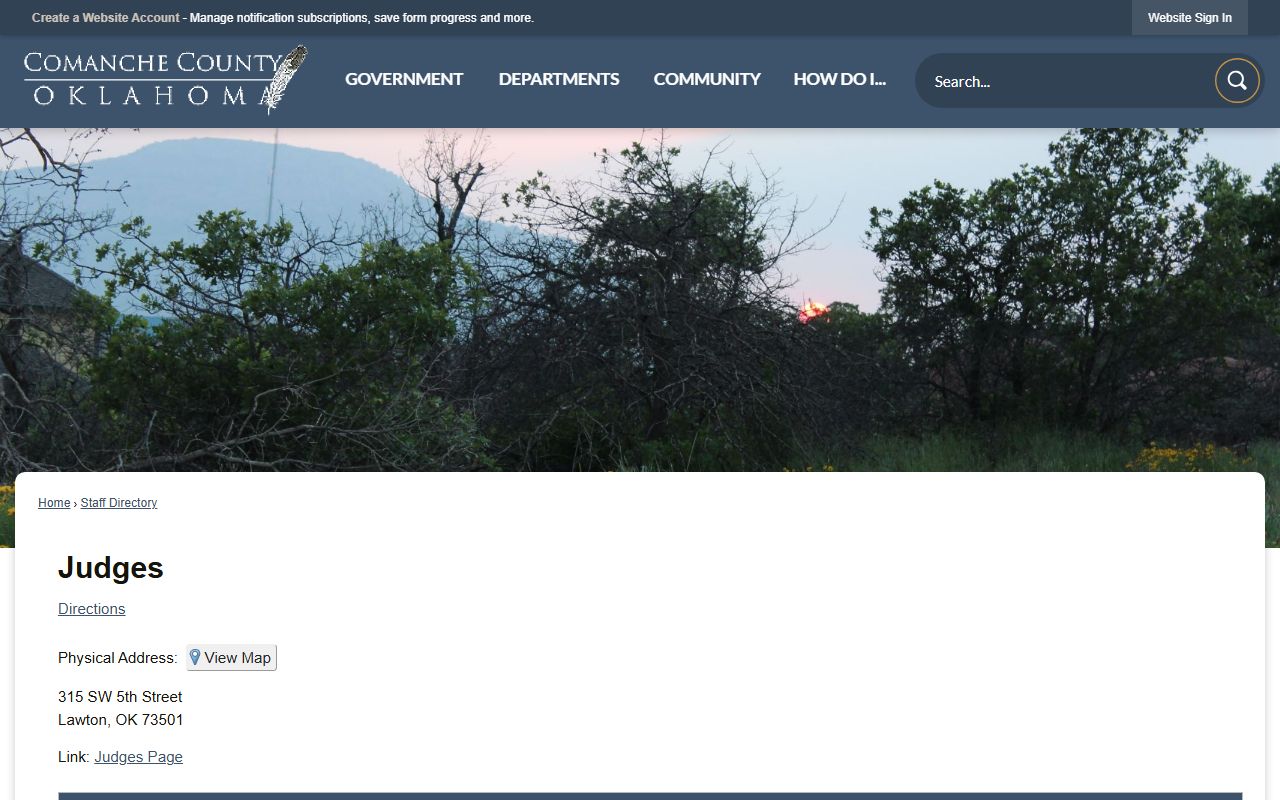
Checking the directory helps when you need to reach the chambers handling a specific estate or guardianship file.
Comanche County Probate Filing Fees
Filing a probate case carries a court fee, and pulling copies carries its own charge. The Court Clerk posts a full schedule online. The county lists family, civil, small claims, and probate-related filings on that page. A specific probate application fee was not listed in the official sources reviewed, so confirm the current amount with the Court Clerk or on the county filing-fees page before you file.
| Item | Amount |
|---|---|
| Records request copy, first page | $1.00 |
| Records request copy, each additional page | $0.50 |
| Certified copy | Certification available on request; confirm fee with the Court Clerk |
| Probate case filing fee | Confirm on the county filing-fees page |
| Guardianship application | Confirm with the Court Clerk |
The county filing-fees schedule lists current charges and the accepted payment methods. For a mailed records request, the office takes a money order or cashier's check made out to the Comanche County Court Clerk, and the form lets you check a box for certified copies.
What Comanche County Probate Records Show
A probate file builds a record of how an estate is opened, managed, and closed. The contents grow as the case moves. Early filings open the matter, and later ones wrap it up. Common documents include the following.
- A petition to admit a will and the will itself, or a petition for administration when there is no will.
- Letters testamentary or letters of administration that name the personal representative.
- An inventory of the estate's property and a notice to creditors.
- Orders authorizing or confirming the sale of estate property.
- A final account and the order that closes the estate and distributes what remains.
Guardianship and trust cases follow their own path. A guardianship file holds the petition, the order, and reports on the ward's care. Trust matters may show petitions over a trust's terms or its administration. Each docket entry carries a date, a code, and a short description.
Note: The personal representative named in the letters is the person with legal power to act for the estate, so heirs and creditors often look for that name first.
Probate Land Records at the County Clerk
Probate often touches real estate, and those documents land with a different office. The County Clerk records deeds and other instruments tied to estates. These include an Administrators Deed, an Affidavit of Heirship, Letters Testamentary, Letters of Administration, an Executors Deed, and orders authorizing or confirming a sale. A search of the county land records can confirm how estate property changed hands. The full scope of those filings sits with the Comanche County County Clerk, a separate elected office from the Court Clerk.
Oklahoma county clerks share a set of online tools for recorded documents, plats, and related filings through the Oklahoma county clerk portal.
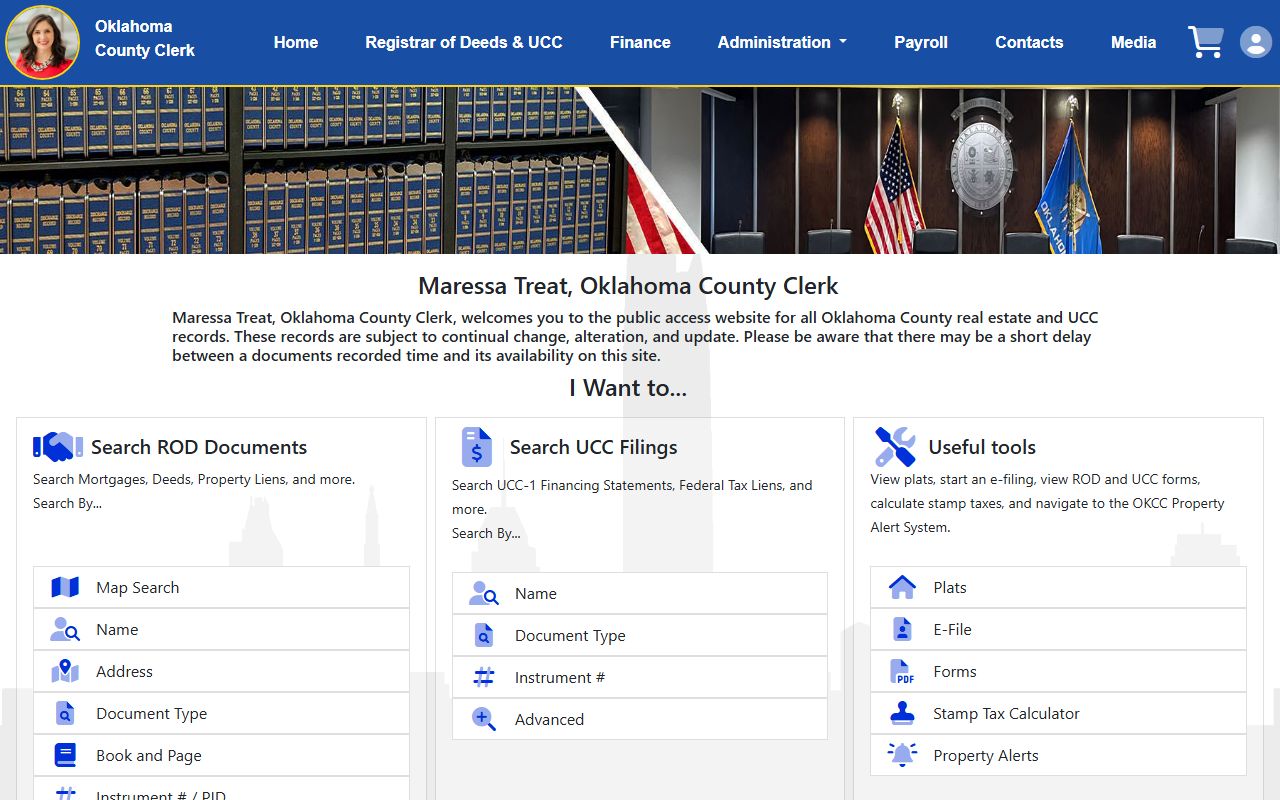
Comanche County's indexed deeds and images reach back to March 1987 and can be searched through the county's land records search when an estate transfers property.
Restricted Comanche County Probate Records
Oklahoma treats court files as public unless a law says otherwise. The Oklahoma Open Records Act, at 51 O.S. Sections 24A.1 through 24A.33, gives the public the right to inspect and copy records held by public bodies. Section 24A.5 keeps those records open during regular business hours, subject to set exceptions. Routine estate filings fall under that open rule.
Some probate-related matters carry limits. Guardianship files that involve a minor, mental-health proceedings, and protected-person details may be sealed or redacted. Records that name juveniles are confidential under 10A O.S. Section 2-6-102. A judge can also seal parts of a file when state law allows it.